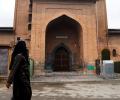
Crucial reforms in Muslim personal law, especially laws related to inheritance and adoption, need to be initiated forthwith; historically speaking, without the State's backing, hardly has any reform taken place or allowed to prevail, asserts Mohammad Sajjad.

Mohammad Sajjad profiles Professor Riazur Rahman Sherwani, 94, versatile mind, intrepid intellectual.

True, Azam Khan is being targeted rather disproportionately and also because of his Muslim identity. That must be protested and resisted. But to say that he is a big messiah, and his profit-making educational enterprise is an issue concerning all Muslims of India, is absolutely unjustified, assert Mohammad Sajjad and Md Mohammad Zeeshan Ahmad.
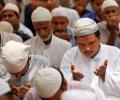
Rahul Gandhi has not erred by not engaging with Muslim conservatives. After all, they had misled his father in 1986 to legislate a misogynistic law after the Supreme Court verdict in the Shah Bano case, which helped the BJP rise at the cost of the Congress, says Mohammad Sajjad.

'They must take the bull of conservatism within their own ranks by its horns as much as they need to speak out against the fallacies of the non-Hindutva (or 'Muslim-friendly') political forces as well,' argues Mohammad Sajjad.

What does one deduce from this silence? That the minorities in the BJP era have been muted, perhaps even coercively, asks Sajad Ahmad Dar.
Articulate segments of Muzaffarpur have been at the the forefront of all anti-establishment mobilisation, which makes their silence over the atrocities in a shelter home in the town puzzling. Could it be that if those accused of horrific crimes belong to dominant castes and if the victims belong to the vulnerable groups, then the middle classes become mute, asks Mohammad Sajjad.
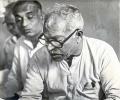
'Karpoori Thakur must be remembered by people today who are tired of witnessing fractious politics where corruption, bigotry, hatred and violence seems to have become distressingly recurrent,' says Mohammad Sajjad.

The man behind Aligarh Muslim University 200 years on.

Don't forget to make your pick for the newsmaker of 2015.

The 'secularists'are more adept at the politics of intense and alarmingly exaggerated fear-mongering, as this kind of politics provides easy votes of Muslims without making them answerable for the concrete issues of poverty, unemployment, lawlessness, and of basic needs like roads, electricity, etc, which is exactly how Nitish Kumar was defeated in the elections, says Mohammad Sajjad.
Muslims constitute 20% of UP's electorate. Currently, Muslim voters are divided between Akhilesh's SP and Mayawati's BSP. What will tilt the balance? Can Muslims back the winning party? Mohammad Sajjad explains the mysteries of UP's Muslim politics.
